STUDENT ENGINEERING PROJECT | Aerospace | Case Study
SBB-1 CubeSat Payload
A student-engineered satellite payload developed by adolescents at Blue Blocks and certified to survive the conditions of space launch.
Project Overview
Student Age Group: Adolescents (12–16 years)
Team Size: 17 Student Engineers
Problem Solved: Designing a space-grade thermal sensor payload capable of surviving rocket launch loads and operating in Low Earth Orbit (LEO).
Status: Launched / Certified Space-Grade
(Mission terminated due to launch vehicle anomaly)
Technology Stack & Materials
- 1U CubeSat Form Factor (10cm × 10cm × 10cm)
- Thermal Sensor Array
- Space-grade Aluminum Chassis
- Integration with ISRO PSLV Platform
The Challenge: Engineering for Zero Margin of Error
Most school projects end at the classroom door. The goal of the SBB-1 Mission was to design a functional satellite payload capable of leaving Earth’s atmosphere entirely.
This challenge was not simulated. A 17-member student engineering team designed a thermal sensor payload that had to meet the rigorous flight standards of IN-SPACe (Indian National Space Promotion and Authorization Centre).
The project required passing an 18-month technical review process and ensuring the payload could withstand the extreme vibrations of rocket launch and the vacuum conditions of space.
From Pink Tower to Payload
The form factor of this satellite is not accidental.
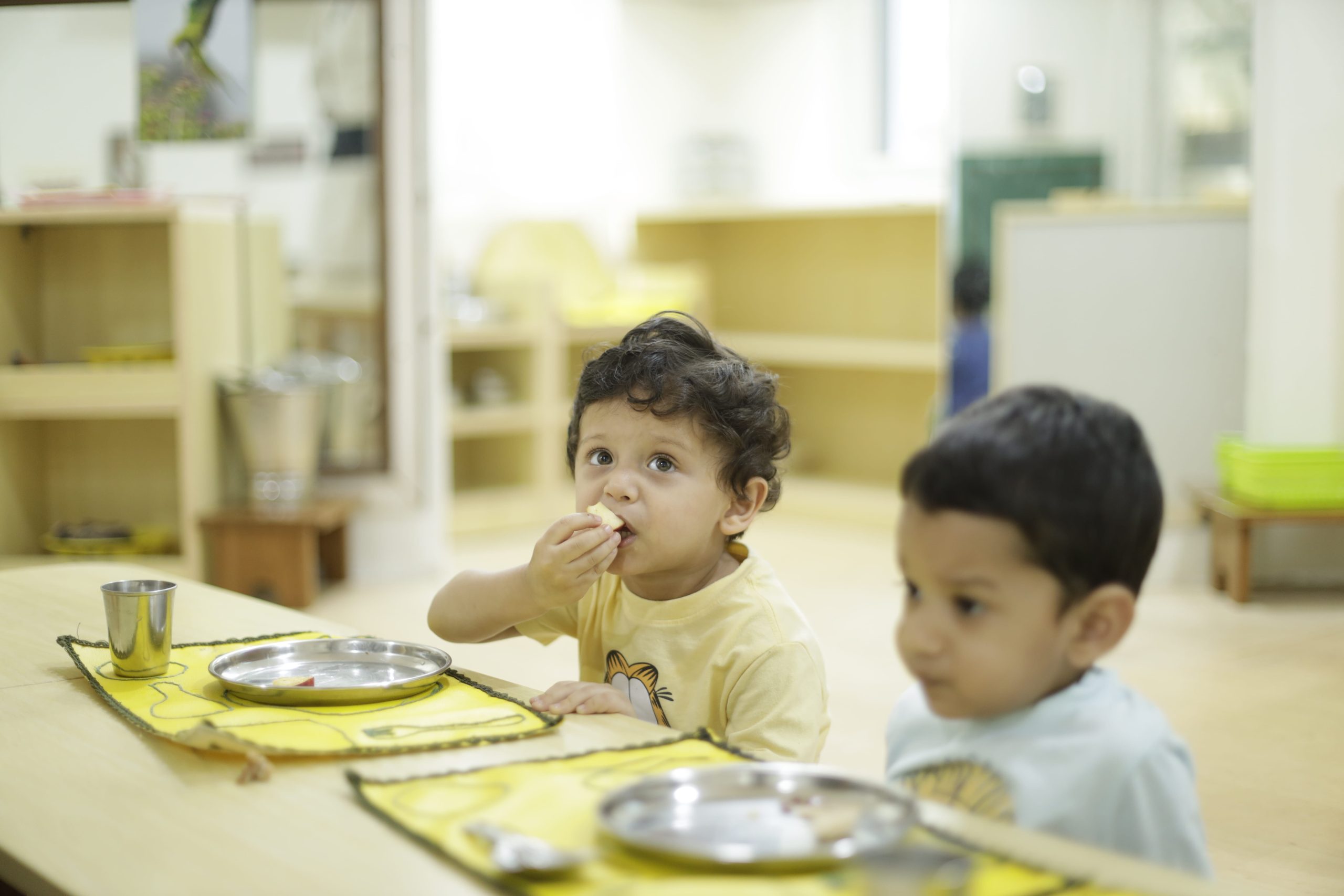
A standard 1U CubeSat measures exactly 10cm × 10cm × 10cm—dimensions identical to the largest cube of the Montessori Pink Tower material that these students first worked with as three-year-olds.
This project represents a remarkable developmental arc: moving from physically grasping a cube as a child to understanding its geometry as an adolescent, and ultimately engineering that same form for space.
The cube moved from the hand of the child… to the mind of the adolescent… and finally to the launch pad.
Mission Outcome: A Successful Failure
On January 28, 2025, the SBB-1 payload launched aboard the ISRO PSLV-C62 mission from the Satish Dhawan Space Centre in Sriharikota.
Stage 1, 2 & 3: Nominal performance.
Stage 4: Ignition anomaly at T+847 seconds.
While the launch vehicle failed to insert the payload into orbit, the student engineering itself succeeded.
The payload passed every pre-flight qualification test including vibration testing, thermal cycling, and pressure validation—demonstrating that adolescent engineering work can meet professional aerospace standards.
Technical Specifications
| Payload Type | 1U Thermal Sensor CubeSat |
| Launch Vehicle | Polar Satellite Launch Vehicle (PSLV-C62) |
| Certification | IN-SPACe Authorized (Safety & Technical Compliance) |
| Launch Site | SDSC SHAR, Sriharikota |
Mission Gallery
Add 3–5 mission photos below.


Related Research
📄 Case Study: Valorization in Orbit: An Adolescent CubeSat Mission (Presented at IMF-AMI 7th National Conference, 2026)
⚖️ Patent Filing: [Insert Link to IP Registry Entry if applicable]